
Matching customer intent is a powerful strategy to boost your ecommerce website’s conversion potential.
Ecommerce experiences that align with and support visitors’ goals throughout the buyer’s journey regularly lead to beneficial outcomes.
Users who engage with on-site search convert at 2.5x the rate of those who don’t. Three-quarters of consumers say that personalized communication makes them more likely to convert (and remain loyal to a brand). Additionally, creating enjoyable, customer-centric ecommerce experiences can boost profitability, with many consumers willing to pay a premium for great shopping experiences that match their needs.
But how do you design your ecommerce website around customer intent? This article provides six practical tips to optimize your ecommerce website, putting web visitors and their goals center stage.
Start with the Outcome the Customer Wants to Achieve
The first (and most essential) step in applying intent-based design to your ecommerce website is identifying the job, occasion, or outcome that led web visitors to your site in the first place.
The reason for starting here is simple. 73% of consumers expect businesses to show they understand and care about their unique needs. But the goal isn’t solely to signal to web visitors that they’re in the right place to resolve their pain points. Instead, it’s about creating a seamless, personalized experience that helps potential clients reach their desired outcomes.
Think of it this way. Most websites use conventional product categories. Yet, these aren’t always helpful to shoppers. Yes, they may give buyers an idea of what the business sells. But they don’t necessarily connect the customers’ goals and the company’s solutions.
Expert consumers may not find this type of design frustrating. But customers who know what they need to do but aren’t sure which product fits their requirements might feel confused.
An ecommerce experience that prioritizes customer intent starts with customer situations. It identifies a need. Then, it uses navigation, collections, and merchandising to translate real-life situations into useful digital starting points for the shopping experience.
For example, take a look at how ultra-thin tracking device company Spotminders organizes its online shopping experience around consumer pain points. In the ‘Find what fits your moment’ section of its homepage, the brand categorizes its solutions by application, including travel, daily life, adventure, and gift-giving. This significantly eases product discovery for first-time web visitors and gives them a simple, streamlined path toward conversion (and satisfaction).
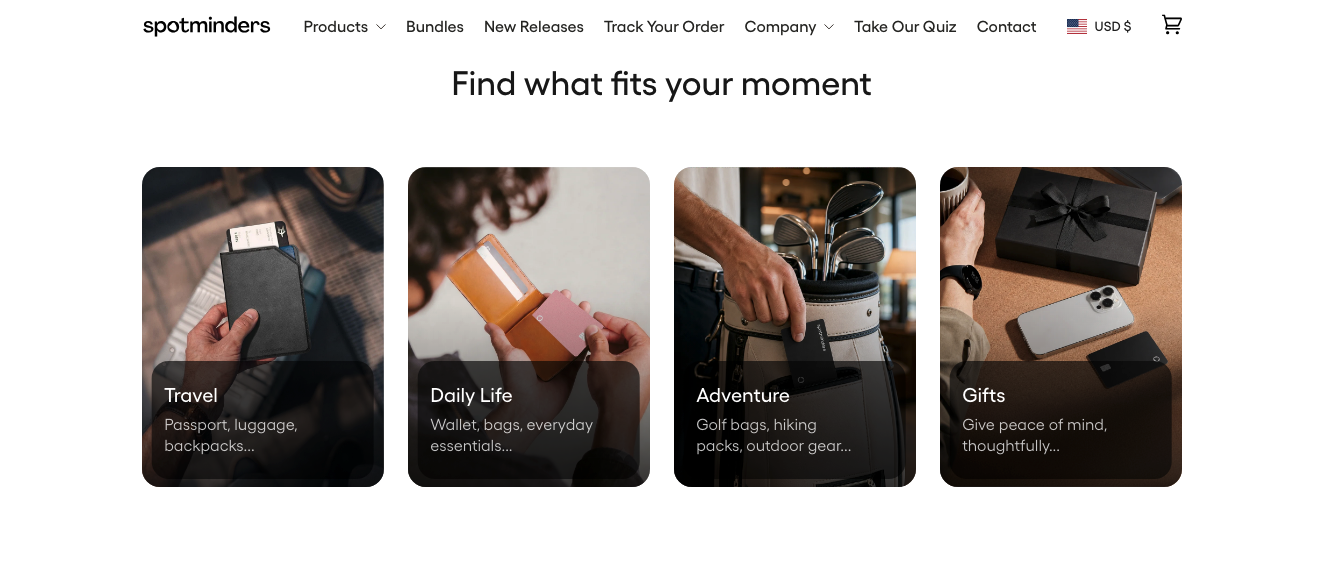
Source: spotminders.com
Account for Both Product Use and Purchase Constraints
In the context of customer intent, the narrative almost always focuses on consumer goals. And that’s not necessarily wrong. Ultimately, what someone plans to achieve with a product is key to helping them move through the buyer’s journey.
Nevertheless, when optimizing for intent, note that it’s not just the customer’s goals that matter. Their practical requirements and limitations also affect the purchase decision. For instance, the setting in which a customer intends to use a product, specific performance or technical requirements, budget limitations, customization needs, or delivery urgency all significantly impact purchase intent.
So, a positive ecommerce shopping experience doesn’t just rely on showing web visitors that your solution fits their needs. It’s about answering customer questions and surfacing key considerations early in the buyer’s journey. That way, web visitors can browse your offer without being forced to consider solutions that don’t fit their needs.
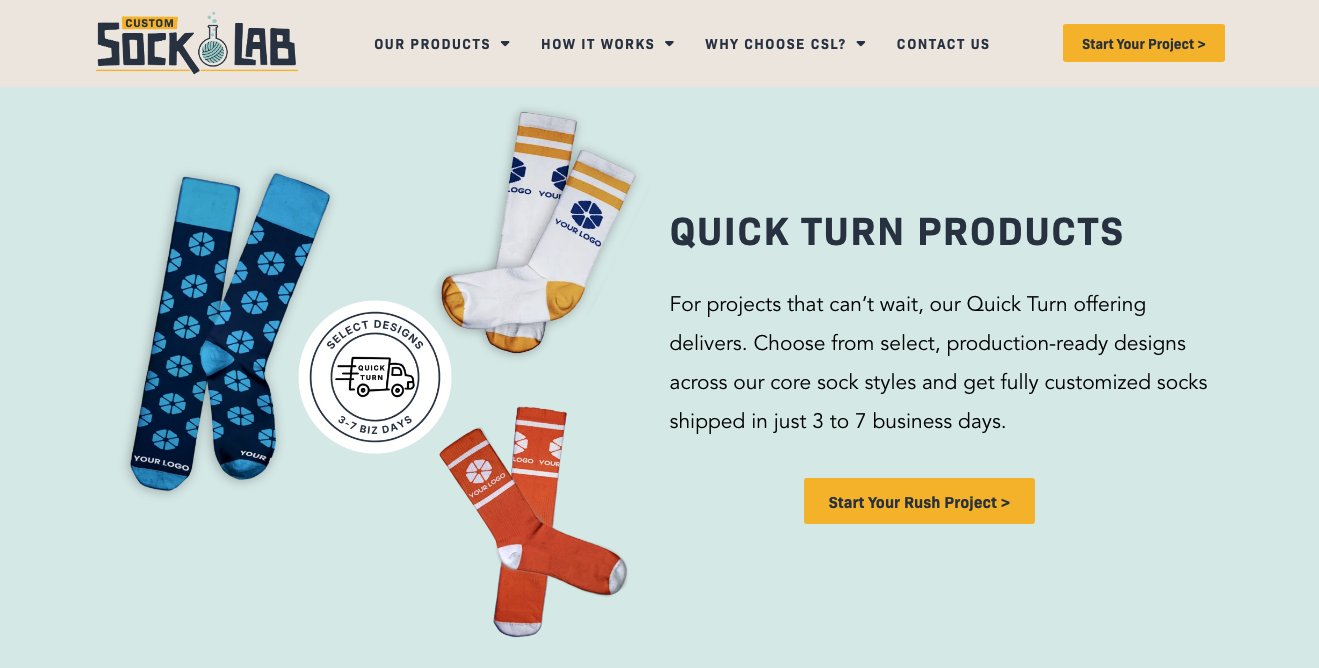
The Custom Sock Lab homepage is an excellent example of intent optimization in practice. Throughout its homepage, the brand highlights its products and specifies differentiators like customer support, customization options, and quality assurances. However, Custom Sock Lab does the best job of matching user intent in the section where it addresses its target audience’s main constraint: delivery times. By highlighting Quick Turn products that can ship in 3 to 7 business days, the brand shows most web visitors that it’s one of the best choices for solving their pain points.
Source: customsocklab.com
Build Navigation Around Common Shopping Missions
Website navigation is a crucial element of the shopping (and web browsing) experience. Research suggests that 76% of global websites have ‘mediocre’ or worse homepage and category navigation, making visitors repeatedly abandon sites because they can’t find the products they came for.
Traditional product taxonomies prevent this CX issue in some cases. But in many cases, they’re not nearly sufficient to reduce the effort visitors need to translate their needs into a suitable product selection.
Intent-based navigation, which organizes products around customer missions, can be a great method to overcome this common conversion killer.
For example, encouraging consumers to shop by occasion, gift recipient, goal, problem, or activity can give qualified buyers a specific, relevant discovery route to follow while still incorporating traditional product categories where suitable.
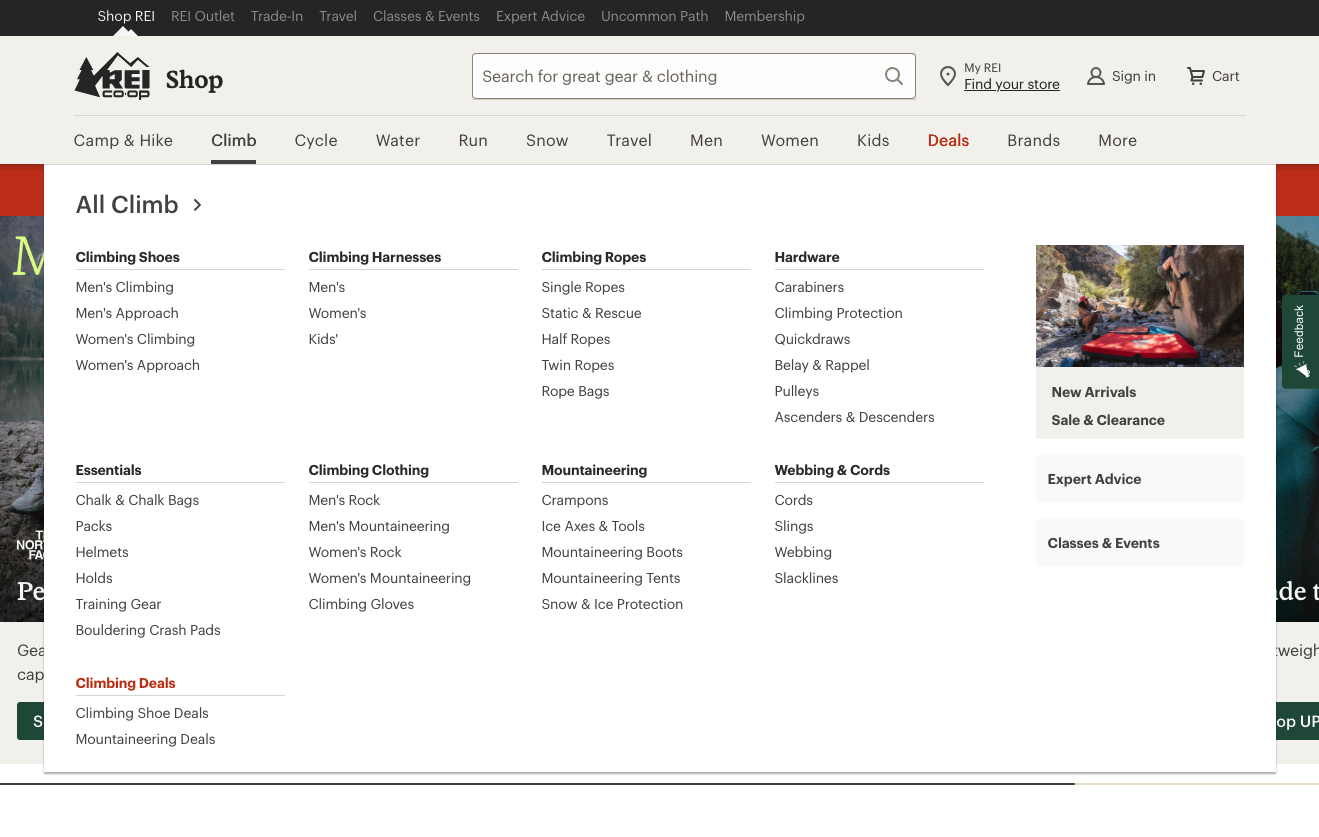
REI’s website navigation is an excellent example of how businesses can design enjoyable ecommerce experiences around customer intent. By categorizing products by activity (hiking, climbing, cycling, etc.), the brand makes it easy for shoppers to narrow their search to relevant items while still allowing them to shop traditional product categories like shoes, clothing, and accessories.
Source: rei.com
Adapt Product Messaging to Different Customer Goals
Designing ecommerce shopping experiences around customer intent isn’t necessarily limited to content organization and visual emphasis. How you frame and describe your offer can also help consumers recognize your products’ value (or overlook them completely).
Here’s what you need to remember about website copy that promotes products. Consumers actively ignore branded messaging that is irrelevant to their goals. Personalization (or intent matching), on the other hand, makes 96% of shoppers more likely to convert.
Of course, it’s not enough to land on one customer-centric way to describe what your solutions do.
Ultimately, a single product may appeal to different audiences, but for different reasons. So, organizing your website messaging around different outcomes can help each audience segment recognize the goals or values they’re trying to meet.
You can create audience-specific website sections. Highlight different product use cases. Present your offer through each product’s benefits. These intent-based messaging strategies help shoppers recognize their specific goals and needs, without requiring separate product listings or storefronts.
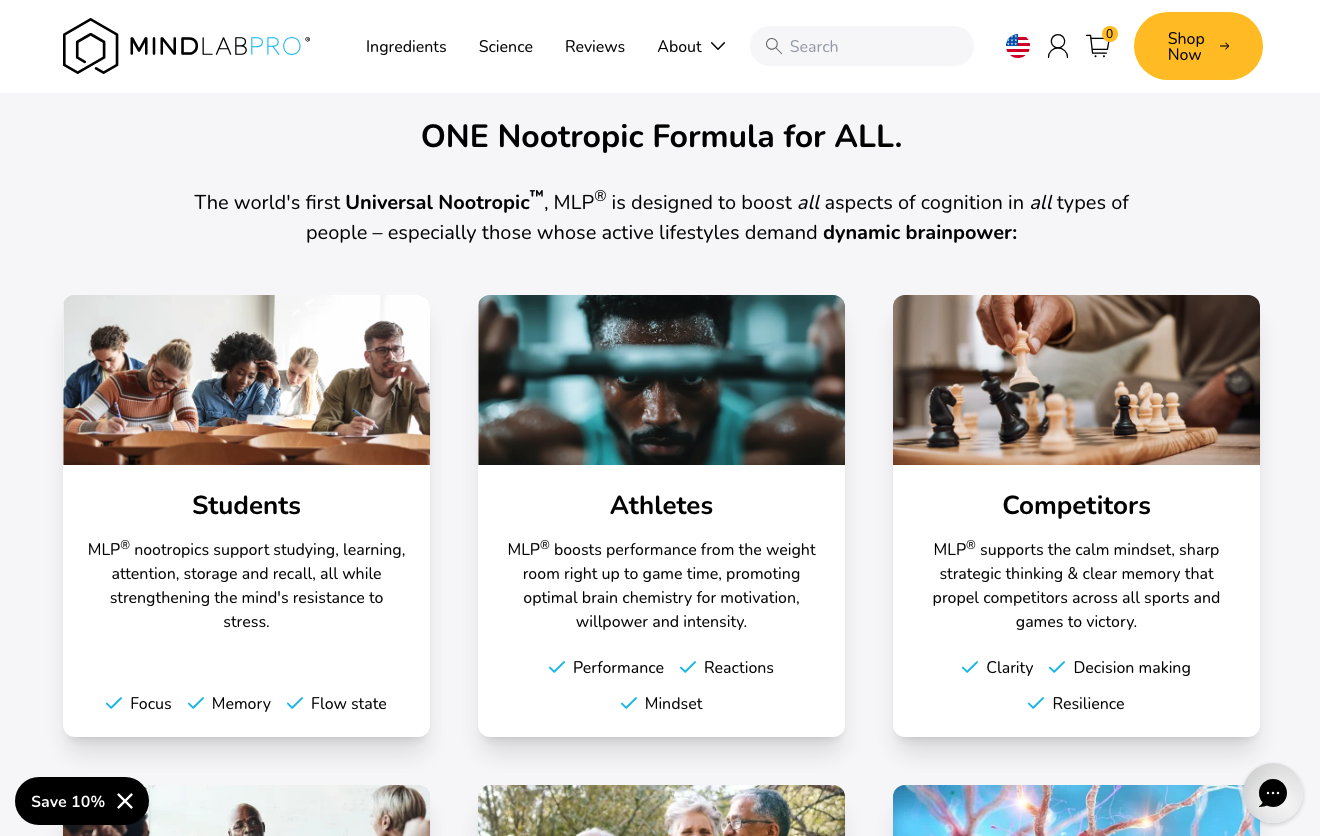
Nootripic brand Mind Lab Pro is an excellent example of a brand that sells one product but presents it in relation to different customer goals. By addressing the needs of different customer segments, like students, athletes, professionals, and older individuals, Mind Lab Pro efficiently communicates the benefits each group seeks, making it easy to promote its single product to a very diverse audience through intent matching.
Source: mindlabpro.com
Use On-Site Guidance to Clarify Uncertain Intent
In some instances, employing ecommerce website design to match customer intent isn’t about optimizing the browsing experience to show consumers they’re in the right place to resolve their pain points. It’s about helping them identify the product characteristics (or categories) most relevant for reaching their goals.
Product discovery and evaluation tools like quizzes, comparison resources, filters, guided buyers’ guides, and educational content can all turn broad customer intent into specific product choices and conversion decisions.
The key to getting this strategy right is to move at a user-friendly pace.
Don’t force web visitors to master complex product terminology or understand technical details. Instead, ask relevant questions they can easily answer. Use these questions to gradually provide personalized guidance, moving potential customers toward a manageable selection of product options, without restricting their exploration or overwhelming them with too many choices.
For example, The Ordinary has a user-friendly Regimen Builder on its website, which helps shoppers quickly find the most suitable products for their needs. This guidance works because it stops consumers from feeling overwhelmed by clinical formulations and ingredients. Instead, it keeps visitors focused on their goals, guiding them to effective products that work for their skin type and deliver the benefits they seek.

Source: theordinary.com
Test Whether Intent-Based Pathways Actually Improve Shopping
Lastly, when implementing intent-based ecommerce web design, it’s essential to evaluate how each change affects on-site behavior in real life.
Yes, you can make some design decisions based on assumptions (or general data) about how people shop. However, to ensure each intent-optimization tip in this guide works for your business, you need to verify its effectiveness.
The best way to check this will be through website analytics. Signals like visitors’ navigation paths, abandonment points, and conversion rates will give you a solid understanding of whether you’re effectively matching intent. Additional information about how visitors use filters, discover products, and what customer support questions they ask after interacting with product pages will reveal where your shopping experience still needs improvement.
Mouseflow’s case studies offer a valuable glimpse into how experience optimization and intent-matching can work together to improve website performance and customer purchase intent. Each resource focuses on the issues and solutions this brand used to resolve its clients’ web performance issues. These articles provide a valuable guide for where to look on your website for improvement opportunities and a few starting points (like navigation and customer education) to design enjoyable, conversion-ready ecommerce experiences.

Source: mouseflow.com
Final Thoughts
Prioritizing customer intent in ecommerce web design can have tremendous potential. It’s not just a surefire way to guarantee your messaging resonates with your ideal customers and that your target audience recognizes the value you offer. More importantly, it’s an effective method to streamline your client’s shopping experience, leading to confident purchase decisions, shorter sales cycles, and better customer satisfaction.
The tactics outlined in this article are easy yet effective ways for you to match your web visitors’ intent. To get the most out of each design strategy, test its effectiveness and make adjustments based on real-world outcomes. That way, you won’t just secure higher conversion rates. You’ll create a website experience that drives engagement and loyalty, ensuring that even clients who are not ready to buy gladly return to your online store in the future.