
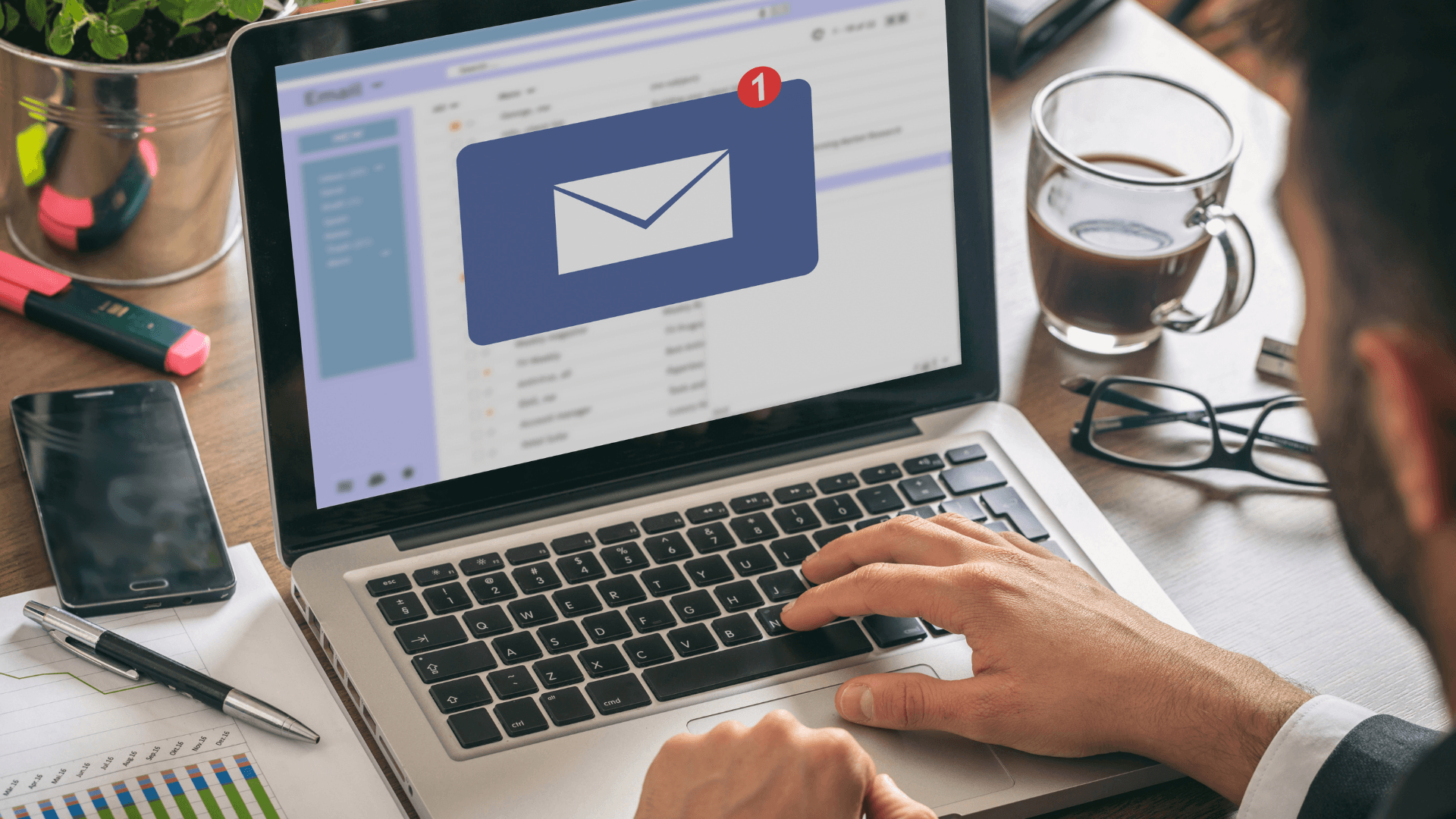
Growth gets harder once you pass a few million in revenue. Paid social costs rise. Attribution gets noisy. Margins tighten. Email stays stubbornly profitable. You own the audience. You control the message. You set the cadence. The question is no longer if you should lean on email marketing for ecommerce. The question is how you turn it into a repeat revenue engine that works every week, without constant heroics from your team.
The Role of Email in a Scaling Ecommerce Brand
As you scale from $5 million to $50 million, your list becomes one of your most important assets. Email keeps you connected across every stage of ecommerce lifecycle marketing, from first touch to third purchase and beyond.
For many brands, email drives between 20 and 30 percent of total revenue. Klaviyo reported that email and SMS together can account for about 25% of eCommerce revenue for brands that invest in them. With a tight ecommerce email strategy, you can push that share higher without raising media spend.
Email also protects you when acquisition channels wobble. When paid performance dips or algorithms shift, strong customer retention email campaigns help you keep revenue predictable. The goal is simple. Turn email from a reactive blast channel into a designed system of email flows for ecommerce that:
• Welcomes and educates new subscribers
• Converts browsers into first time buyers
• Turns one time buyers into repeat customers
• Reactivates lapsed segments before they churn out
Foundation First
Before you build complex journeys, you need a clean foundation. If your data, consent, and infrastructure lag, no tactic will save you.
1. Data and tracking basics
Start with clear, consistent events flowing from your ecommerce platform into your email service provider. At minimum, you need:
• Site tracking for browse, product views, and cart events
• Purchase events with order value, items, and discount data
• Subscribe and unsubscribe events with source information
You also need a reliable way to connect customer identities across sessions and devices. Without this, you fragment the customer journey and undercount repeat revenue from email.
2. List growth with clear consent
Email growth is still one of the best ROI plays in digital. According to Litmus, brands report an average email ROI of about $36 for every $1 spent. You protect that return when you prioritize permission and relevance over sheer list size.
Focus on:
• On site popups and embedded forms with a clear value exchange
• Strong opt in language that matches your sending practices
• Separate consent where needed for SMS or regional compliance
3. Brand and content guardrails
Scaling teams need shared rules. Document:
• Voice and tone guidelines
• Design system and templates
• Offer rules, including discount limits and frequency
This keeps email marketing for ecommerce aligned with your broader brand and prevents channel fatigue as volume scales.
What “Good” Email Performance Looks Like for $5–50M Ecommerce Brands
Benchmarks do not run your business, but they help you set direction. At $5–50 million, you should expect email to carry real weight.
Some reference points:
• Email often contributes 20 to 35 percent of total online revenue for mature ecommerce brands. Omnisend found that automated messages drove about 31% of email orders while making up a small share of sends.
• For automated flows, order based conversion rates in the 5 to 10 percent range are common for high intent sequences like cart recovery and post purchase cross sell.
• For campaigns, many brands target click rates above 1.5 to 2 percent and revenue per recipient that rises over time as segmentation improves.
Strong programs focus on revenue per subscriber and customer lifetime value, not vanity metrics. When your ecommerce email strategy works, you see:
• Shorter time from first visit to first purchase
• Higher repeat purchase rate
• Longer retention curves across cohorts
That is the signal you want from your email flows for ecommerce. Not inbox volume, but durable customer behavior change.
The 7-Play Email System
You likely have some flows active already. The difference at scale is discipline and sequence. These seven plays cover the full ecommerce lifecycle marketing arc and stack together into a repeat revenue machine.
1: High intent welcome series
The welcome series sets expectations and earns the first click. It is the entry ramp to your brand, not a coupon dispenser.
Core elements:
• Thank you and value recap within 5 minutes of signup
• Clear brand story and product proof in message two
• Social proof and best sellers in message three
• Limited incentive for first purchase, if aligned with your margin strategy
Target: a strong share of first orders influenced by the welcome flow and a measurable lift in first purchase rate for subscribers versus non-subscribers.
2: Browse abandonment with intent signals
Non buyers send a rich trail of behavior. You turn that into revenue when you respond quickly with context. Browse abandonment flow should be set up that start when:
• A user you know looks at the product category more than once
• Cart events are not happening in a set frame of time
The messages should be clear and useful. Show the products that had views, five short proof and tell the next step. Avoid heavy discounting here. The goal is to nudge, not train prospects to wait.
3: Cart and checkout recovery
Cart recovery is still one of the highest ROI email flows for ecommerce. Barilliance reported that average global cart abandonment hovers near 78%.
Your P&L should promptly reflect every percentage point you get back.
A strong flow of carts:
Starts within an hour of giving up
Makes a list of things and their worth that were abandoned
Answers typical questions about shipment refunds and fit
Increases urgency or incentive solely for high-value or repeated abandons
4: Post purchase onboarding and cross sell
After a first order, the relationship is fragile and full of potential. You do not stop at a receipt. You guide the next purchase.
A sequence should be made that:
Confirms the order and establishes shipment expectations
Teaches customers about product usage and care
Suggests related goods based on order data
Asks for reviews and user generated content at the right time
In a study done by Bain and company it was found that when customer retention was increased by 5% it raised profits between 25 and 95%.
5: Replenishment and lifecycle nudges
If you sell consumables or products with a natural reorder window, replenishment flows are essential. You predict when a customer will run low and send a friendly reminder with a friction free path back to purchase.
Steps:
• Model average time to reorder by product or category
• Trigger messages a set number of days before and after that mark
• Offer bundles or subscriptions when it fits your model
6: Winback and churn prevention
Every brand has a window where an inactive customer is at risk of churn. Your customer retention email campaigns should meet them before they slip away.
Define:
• An “at risk” segment based on days since last purchase and email engagement
• A “lapsed” segment where you employ stronger offers or last chance language
Winback flows often include progressive incentives, strong social proof, or new product launches. Keep an eye on deliverability. Once a customer moves past your lapsed window, suppress them from future sends to protect list health.
7: Campaign rhythm that supports flows
Flows carry intent driven messages. Campaigns carry your broader storytelling, launches, and promotions.
They must work together:
Make a calendar that:
Always sends flow first for triggered events
Campaigns don’t step on high value flow moments
Key segments get different content based on their lifecycle stage
Companies that offer personalized services make more money.
McKinsey reports that companies that excel at personalization generate about 40% more revenue from those efforts compared to average peers. Thoughtful segmentation in your campaigns helps you move in that direction.
Mistakes That Quietly Kill Ecommerce Email Revenue
Even experienced teams leave money on the table. A few common issues:
Over sending to unengaged subscribers
Chasing short term revenue with indiscriminate blasts hurts you. It suppresses engagement rates and raises spam complaints. Over time, inbox providers respond, and even your best customers stop seeing your email.
Fix it with:
• Engagement based segments with clear suppress rules
• Regular list cleaning and reconfirmation campaigns
Under investing in creative and testing
Many brands A/B test subject lines then leave the rest of the experience untouched. You gain more when you test:
• Offer framing and thresholds
• Message length and structure
• Content blocks by segment
Even small improvements in click through rate move revenue at volume.
Disconnected data and tools
When your ecommerce platform, email platform, and analytics do not align, your metrics mislead you. You misattribute revenue and misjudge the impact of customer retention email campaigns.
You need to have tight integrations, uniform IDs, and shared definitions of important KPIs like repeat revenue, cohort retention, and first order attribution.
Flow Priority Table: What to Build First
You probably can’t create everything at once. Use this prioritization plan to decide what order to do your work in based on how important and difficult it is.
High priority flows
• Cart and checkout recovery: highest intent, quick payoff, and moderate setup work.
• Welcome series: the first thing any subscriber sees, and it touches every new contact.
• After the sale: affects reviews, support load, and retention.
Medium priority flows
• Abandonment of browsing: Has a big effect and is easy to follow, which is useful for bigger catalogs.
• Winback: Saves clients who are at risk, which protects your acquisition budget.
Later stage flows
• Replenishment: This is necessary for consumables, although timing models need to be tested.
• Advanced lifecycle journeys: once the foundations are in place, VIP programs, referral flows, and cross-channel sequences can be set up.
Look at this table again every three months. Your priorities alter as your product mix, margins, and channels do.
Putting It Together: A 7-Play Email Blueprint for $5–50M Brands
To turn theory into execution, map the seven plays to a simple blueprint you share across growth, merchandising, and operations teams.
Step 1: Define lifecycle stages
Align on how you label:
• New subscriber, prospect, and first time buyer
• Active repeat customer, VIP, at risk, and lapsed
Use clear day based rules and make sure each stage is mutually exclusive.
Step 2: Map flows to stages
Link each of the seven plays to a stage in the lifecycle. For instance:
• Welcome and explore flows for new subscribers and prospects
• Cart, checkout, and post-purchase flows for people who are buying for the first time
• Replenishment and cross-selling flows for people who are buying again
• Winback flows for people who are at risk or have lapsed
Step 3: Set volume and frequency rules
Set a schedule for how often each stage should hear from you through a mix of flows and campaigns. Don’t let marketing get in the way of important experiences like unboxing and initial use.
Step 4: Align on measurement
Choose a small set of north star metrics for your email marketing for ecommerce program, such as:
• Revenue per subscriber
• Repeat purchase rate by cohort
• Customer lifetime value by acquisition source
Instrument dashboards that show both aggregate performance and flow level health so your team can move quickly.
How Your Ecommerce Platform and Integrations Power These Plays
Email performance starts with the quality of your commerce infrastructure. If your platform does not give you accurate data and reliable integrations, your ecommerce email strategy stays stuck at the surface.
Strong platforms make it easy to:
• Automatically sync orders, items, and customer profiles to your email tool.
• Keep track of events as they happen so that triggers go off when intent is highest.
• Segment by behavior, value, and lifecycle stage with confidence.
Integration depth matters. Segment shared that brands using more than three integrated marketing channels see on average a 24% lift in conversion rates compared with single channel programs. Tight connections between your ecommerce platform, email tool, and analytics stack give you similar leverage.
This is where CV3 focuses. CV3 gives established eCommerce brands a unified platform that connects storefront, customer data, and marketing systems in a way built for scale. You get:
• Clean order and customer data ready for advanced segmentation
• Flexible integrations with leading ESPs and marketing tools
• Support from a team that understands the realities of $5–50M brands
If your team wants to turn email flows for ecommerce into a reliable growth channel, you need that foundation in place. CV3 helps you get there faster so you focus on strategy and creativity, not plumbing.
Final Thoughts
Email marketing for ecommerce rewards structure, not sporadic effort. When you line up these seven plays, you build a system that:
• Welcomes, educates, and converts new buyers
• Increases repeat revenue without constant discounting
• Extends customer lifetime value with relevant moments across the lifecycle
Each play pulls its own weight. Together, they give your marketing team a reliable engine that supports every other channel.
If you want to see how your current program stacks up
and where your platform helps or holds you back, talk with the team at CV3. You get an honest view of your data foundation and a path to build email and lifecycle marketing that matches the scale of your brand.
FAQs for Email Marketing for Ecommerce
How often should you email customers for an ecommerce brand?
Most mid market brands send at least one to three campaigns per week to their active segments, on top of automated flows. The right frequency depends on your product type, margin structure, and audience response. Use engagement based segments so your most active subscribers hear from you more often while unengaged contacts receive fewer messages or move into re engagement and suppression paths.
What is the difference between campaigns and flows in ecommerce email strategy?
Campaigns are one time messages sent to a defined audience on a scheduled date, such as promotions or new product launches. Flows are automated sequences triggered by customer behavior or lifecycle events such as signing up, adding to cart, or completing a purchase. Both matter. Flows handle intent driven moments and repeat revenue, while campaigns support merchandising and brand storytelling.
Which email flows for ecommerce drive the most revenue?
For most brands in the $5–50M range, cart and checkout recovery, welcome series, and post purchase flows drive the largest share of automated revenue. Once your core flows are working, browse abandonment and winback flows add a lot of volume. Over time, replenishment and advanced lifecycle journeys create more incremental profit, especially for consumable or replenishable products.
How do you measure repeat revenue from email?
Your analytics stack should start with events that are clearly defined. Send emails based on your desired model, like last click or multi touch. Keep an eye on the percentage of revenue from repeat customers who came through email, as well as other indicators like the rate of repeat purchases and the number of orders per active subscriber. To see how email performance varies between groups, divide them up by acquisition source.
When should a brand upgrade its ecommerce platform to support stronger email?
If your data syncs aren’t always consistent, you can’t track enough events, you can’t segment your data well, or you have trouble connecting to contemporary ESPs and analytics tools, it’s time to change. If your marketing team spends more time correcting data problems than coming up with new campaigns and processes, your platform is making things slower. At that stage, a platform such as CommerceV3, designed for scaling mid-market brands, enables you to realize the complete potential of email marketing for ecommerce and comprehensive lifecycle initiatives.