
Your buyers expect fast answers, personalized help, and zero friction. Support tickets keep rising, channels keep multiplying, and your team feels the pressure. This is where ai in e commerce shifts from a nice-to-have to a core part of how you support every customer.
What Are AI Chatbots in eCommerce?
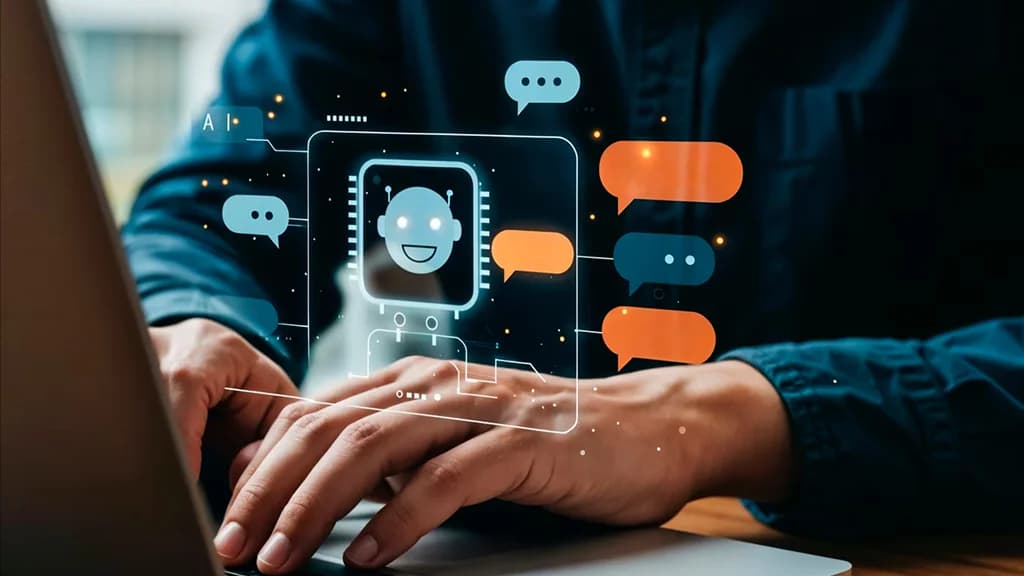
AI chatbots in eCommerce are like virtual assistants who help customers on your site or in your apps by answering their questions right away. They employ natural language processing to figure out what a customer types or says and then give them the most useful answer, action, or next step.
Modern ai powered ecommerce support bots do much more than surface static FAQs. They connect to your product catalog, order data, and policies. They can look up order statuses, recommend products, collect emails, and even trigger workflows in your ai ecommerce platform.
An e-commerce bot powered by generative AI goes beyond mere pre-written scripts. It crafts responses that are both clear and human-like, perfectly aligned with your brand’s voice, all while drawing on your specific policies and data.
How Do AI Chatbots Improve eCommerce Customer Support?
AI chatbots enhance customer support by quickly addressing frequently asked questions and directing more complicated problems to the appropriate human agents. This technology helps to decrease wait times, speed up responses, and ensure a consistent experience for customers, regardless of the channel they choose.
AI in e-commerce support frees your team to focus on the critical interactions, rather than getting mired in the same old questions. The chatbot takes care of the routine stuff, answering questions about shipping, returns, and product specifications. This frees up your agents to deal with more complex matters, such as escalations, VIP accounts, and high-value orders.
Why Are AI Chatbots Important for Online Stores?
Support is now a core part of your brand. Slow or unclear responses push shoppers away. AI chatbots protect revenue by keeping support responsive, accurate, and accessible from any device.
For growing brands, ai powered ecommerce support is also a force multiplier. As volume scales, you do not need to scale headcount at the same rate. A single chatbot can handle thousands of concurrent conversations while your human team stays focused on strategic work.
AI chatbots also tie directly into your broader ai ecommerce platform strategy. When connected to marketing tools, they help capture leads, collect preference data, and recover abandoned sessions. When connected to operations, they deflect tickets about shipping, inventory, and returns before they hit your inbox.
How AI Chatbots Provide 24/7 Customer Assistance
Customers shop at all hours. Support is expected to keep pace with that level of activity. In e-commerce, AI-powered chatbots handle the workload around the clock, even during busy periods, without the risk of fatigue or accumulating unresolved issues.
A well-trained bot can do quite a bit:
• It can field questions before a purchase, covering product details, sizing, and whether things will work together.
• It can keep tabs on orders and shipments.
• It can guide customers through the process of returning or exchanging items.
• It can gather information on more complicated problems and generate a support ticket for your team.
Even when a human needs to step in, the bot sets the stage. Your team gets a full record of the conversation, including what the customer wanted, the products in question, and any troubleshooting that’s already been attempted. That reduces the back and forth and shortens time to resolution.
With generative AI powering e-commerce support, those around-the-clock interactions are less mechanical. The responses adjust to the tone, the way something is said, and the actual issue at hand, rather than just regurgitating the same message verbatim.
How AI Chatbots Personalize the Customer Shopping Experience
Generative AI in personalized e-commerce leverages a customer’s actions, past purchases, and the current situation to customize each interaction. Rather than providing a uniform response to all customers, the bot adjusts its approach.
The chatbot, for instance, is capable of:
• Suggesting items tailored to a customer’s previous buying habits or what they’ve looked at before.
• Modifying these recommendations based on specifics like size, style, or dietary restrictions.
• Remembering past interactions and picking up where things left off.
• Providing helpful content or guides to assist the customer in making a decision.
This is the point where AI-driven e-commerce support intersects with merchandising. The conversation itself transforms into a component of the shopping experience. The bot steers a customer from inquiry to consideration to purchase, all without coming across as overly aggressive.
When you integrate generative ai in ecommerce across your stack, the chatbot also syncs with email and SMS. A customer who inquired about a product yesterday could get a personalized follow-up. This might include frequently asked questions, reviews, and a friendly nudge to come back.
How AI Chatbots Reduce Customer Support Costs for eCommerce Businesses
Support costs grow fast as your order volume grows. AI chatbots help you control that growth without lowering service quality.
With ai in e commerce support, you reduce the number of tickets that need a human response. The bot handles repetitive questions end to end. It also shortens every assisted interaction by collecting context before an agent steps in.
This means:
• Lower average handle time for human agents
• Fewer full time roles required to cover peak periods
• Less training effort on basic topics, since the bot carries those
• More capacity for proactive outreach and retention projects
When you layer ai solutions for ecommerce on top of support insights, you also prevent problems before they generate tickets. If the bot sees a spike in questions about a policy or product, you adjust content or flows on your site to address it early.
How AI Chatbots Integrate with eCommerce Platforms
The real strength of ai powered ecommerce support comes from integration. A chatbot should plug into your storefront, CRM, order management, and marketing tools without friction.
A modern ai ecommerce platform like CV3 uses intelligent tools and real time insight across catalog, checkout, and marketing. Your chatbot sits on top of that connected foundation. It can find products, check what’s in stock, retrieve order information, and initiate automated processes, all from a single, reliable source.
A robust integration provides a number of benefits.
You gain instant access to accurate product and inventory details.
Uniform pricing and promotional offers, no matter the sales channel.
A more seamless transition between automated and human support, with data flowing effortlessly between systems.Consolidated analytics that reveal how support impacts both conversion rates and customer retention.
By connecting generative AI in e-commerce support to your platform in this manner, each interaction becomes a valuable piece of data. You gain insight into how support drives sales, identify the points of friction that hinder purchases, and determine where to allocate resources moving forward.
What Are the Best Practices for Implementing AI Chatbots in eCommerce?
To get real results from ai in e commerce support, you need a clear plan. Start with a narrow, high impact scope. Focus first on a handful of use cases like order status, shipping, and basic product questions. Prove value, then expand.
A few key considerations:
First, ensure your chatbot’s objectives align with your broader business aims, whether that’s reducing support requests or boosting sales.
Next, train the bot using your actual policies, product information, and the specific tone of voice your brand uses.
It’s also essential to provide customers with a straightforward path to human assistance when they require it.
Regularly review chat transcripts to improve responses and address any knowledge shortfalls.
Furthermore, track the bot’s impact on support metrics and revenue.
Finally, prioritize data privacy and compliance at all times.
To truly elevate your chatbot beyond the basics, collaborate with an AI e-commerce platform and an agency team that comprehensively understands your entire sales funnel. You need support that integrates marketing, merchandising, and operations, rather than just a standalone tool.
CV3 brings together an ai powered ecommerce platform and a hands on Agency+. You get product catalog and search tools, marketing automation, analytics, and AI driven personalization working as one system. Our team helps you design and deploy ai solutions for ecommerce that fit your brand, support your team, and move real revenue.If you are ready to build smarter support and stronger growth with AI, talk to CV3 today.