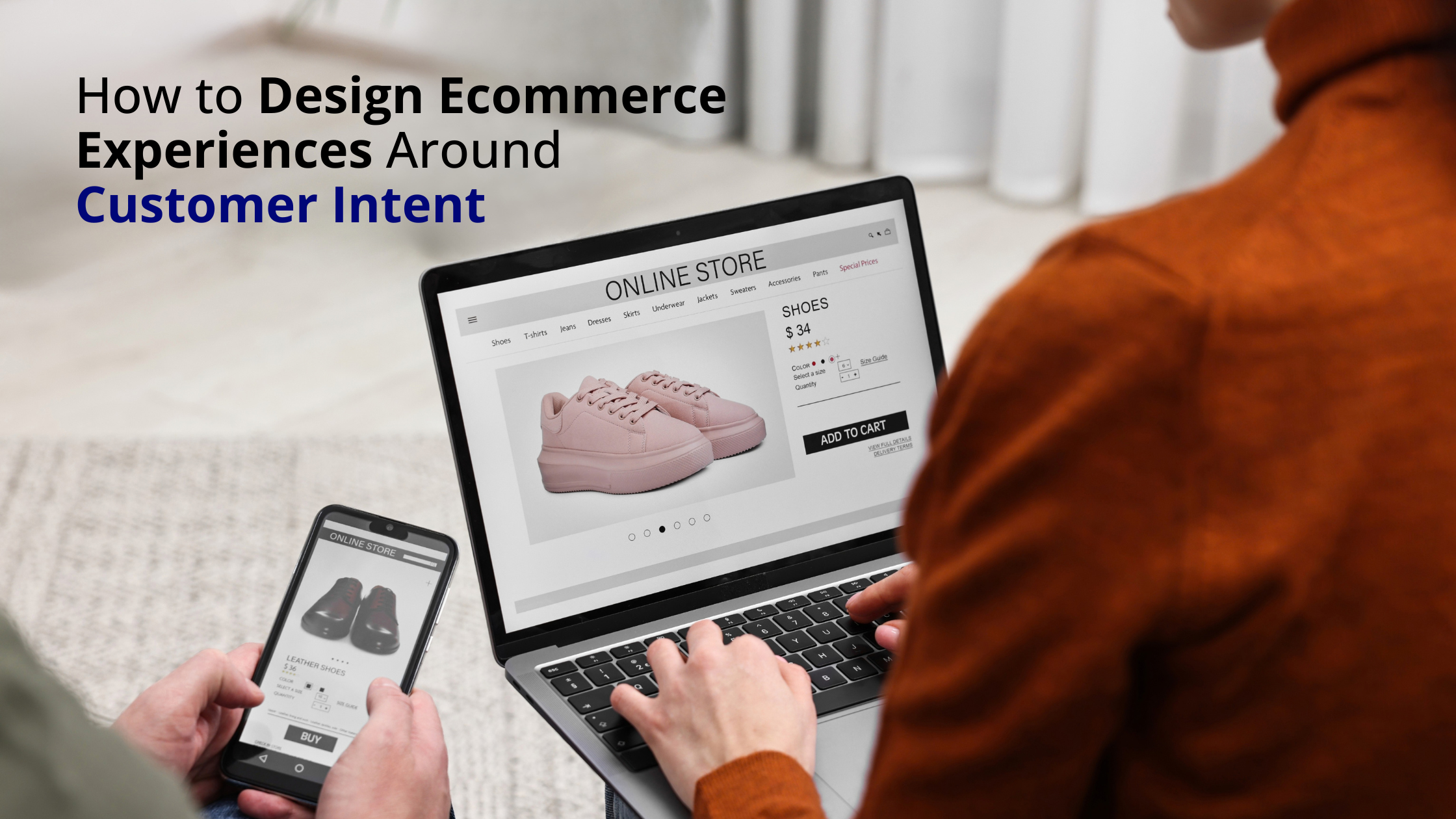


The best-performing ecommerce stores in 2026 are not the ones with the most products or the biggest ad budgets. They are the ones that show each shopper the exact right product at the exact right moment. AI product recommendations now generate an average of 35 percent of total revenue for stores that implement them well — up from 31 percent two years ago. The technology has moved far beyond simple “customers also bought” widgets into real-time behavioral analysis, visual similarity matching, and predictive purchase modeling.
This guide walks through what AI product recommendations actually do, where to place them across your store, how to measure their real impact, and what stack fits your stage. Written for ecommerce store owners who want to lift revenue from the traffic they already have, not just chase more.
Why are AI product recommendations such a high-leverage investment?
Recommendations are the single most measurable revenue lever in ecommerce because they work on traffic you have already paid to acquire. The math is brutal:
- AI-powered product recommendations drive an average of 35 percent of total revenue for stores using them
- 71 percent of consumers expect personalized experiences from online retailers, and 76 percent get frustrated when they don’t find them
- Stores using AI-driven personalization see an average conversion lift of 26 percent
- Customer lifetime value increases 20 to 40 percent for personalized stores compared to static ones
- Beauty company Orveon Global reported 10 to 15 percent immediate AOV lift across every brand after rolling out AI recommendations
- Amazon attributes 35 percent of total sales to its recommendation engine
The opportunity is enormous and the gap between top performers and average stores is widening every quarter. Stores still relying on manual “related products” widgets are losing share to competitors using AI to surface the right product at the right moment.
What is an AI product recommendation system and how does it work?
An AI recommendation system is a machine learning engine that analyzes shopper behavior, product attributes, and purchase patterns to suggest the most relevant products to each individual visitor. Unlike static “you might also like” sections built on manual rules, AI systems learn and adapt continuously based on real shopper behavior.
The core data inputs:
- Shopper behavior — pages viewed, time on page, search queries, clicks, add-to-carts, and past purchases
- Product attributes — category, brand, price, color, materials, descriptions, and tags
- Cohort patterns — what shoppers similar to this one bought next
- Real-time signals — current session activity, traffic source, device, and time of day
- Purchase history — for returning shoppers, what they have bought, returned, or browsed in the past
The system processes this data through machine learning models, then surfaces personalized recommendations across your store, email, and ads in real time. The best implementations refresh recommendations dynamically as the shopper’s behavior evolves within a single session.
What are the three main types of recommendation algorithms?
Most modern recommendation systems use one of three approaches, or a hybrid that combines them. The right choice depends on your store’s stage, data volume, and catalog complexity.
- Collaborative filtering — recommends products that similar shoppers bought (“people who bought X also bought Y”). Works best for stores with significant order history and large customer bases.
- Content-based filtering — recommends products with similar attributes to ones the shopper already viewed (color, category, brand, price range). Works best for stores with new visitors or limited order history.
- Hybrid models — combine both approaches, often layered with deep learning. The best of both worlds for most mid-market and enterprise stores.
For a specialty food brand, content-based filtering surfaces other hot sauces in the same heat range when someone views one. Collaborative filtering surfaces what other heat-seekers bought after that purchase. Hybrid layers both, with weighting based on confidence in the data. Most stores in 2026 should be running hybrid systems by default, since AI tools have made them accessible without enterprise development budgets.
Where should you place AI product recommendations on your store?
This is the part most articles glaze over. Where recommendations appear matters more than which algorithm you choose. Different placements serve different jobs across the funnel.
Homepage
Personalized hero sections and “recommended for you” rails turn the homepage from a static catalog into a dynamic storefront tailored to each visitor. New visitors see best-sellers and trending items. Returning visitors see categories they have browsed and items they have viewed. This single placement often drives 5 to 15 percent of recommendation revenue.
Category pages
AI-powered sort orders surface the products most likely to convert for each individual shopper rather than a static “best-selling” order. Visual similarity rails (“more like this”) on category pages help shoppers refine without re-filtering. This is especially valuable for fashion, beauty, and home goods.
Product pages
The placements that earn the most revenue:
- Frequently bought together — bundles complementary products at the highest-intent moment
- You may also like — surfaces alternatives if this specific product isn’t quite right
- Customers also viewed — supports browsing across the consideration set
- Complete the look / kit — particularly powerful for apparel, beauty, and home
For an apparel brand, “complete the look” recommendations on a dress page can surface shoes, accessories, and outerwear, lifting AOV materially. For automotive parts, “fits with this part” recommendations can surface compatible accessories and required hardware.
Cart and checkout
Cart drawer recommendations are some of the highest-converting placements available. Shoppers in cart mode have already committed to buying. Adding “frequently bought together” or “complete your order” suggestions at this moment can lift AOV 8 to 20 percent. Rebuy users on Shopify report Smart Cart drawer recommendations earning 12 percent attach rates on related products.
Post-purchase
Thank-you page upsells with “accept-to-add” offers (one-tap add to existing order) capture additional revenue at the moment of peak satisfaction. Brands report 6 percent or more revenue per order from this single placement.
Email and SMS
AI-driven product recommendations inserted into email flows dramatically outperform static product callouts. Klaviyo’s AI Product Recommendations block, for example, lifts revenue per recipient by 28 percent or more for stores with 200+ SKUs. This connects directly to your email marketing flow — recommendations make every flow more relevant and more profitable.
What are the most effective recommendation strategies for different store stages?
Not every store needs an enterprise personalization engine. The right strategy depends on your stage. Three tiers cover most ecommerce brands.
Starter stage (under $50K/month)
Use what your platform gives you for free. Shopify, BigCommerce, and most major platforms include native recommendation features that significantly outperform no recommendations at all.
- Shopify’s free product recommendations API
- Built-in “frequently bought together” widgets
- Basic email recommendations through your existing ESP
Total cost: usually $0 extra beyond your existing platform subscription. The lift over zero recommendations is often 10 to 15 percent revenue alone.
Growth stage ($50K to $500K/month)
Add a dedicated personalization tool that learns from your store’s specific data:
- Rebuy for Shopify cart and post-purchase upsells
- Klaviyo AI for email recommendation personalization
- Octane AI for product discovery quizzes that segment shoppers and recommend products
- Nosto for full-site personalization on growing brands
Total cost: typically $300 to $1,500 per month across the stack. Revenue lift compounds as the system learns from more data.
Scale stage ($500K+/month)
Move to enterprise-grade personalization with deeper customization:
- Bloomreach or Algolia Recommend for full-site search and discovery
- Constructor for behavioral-driven discovery on large catalogs
- Custom models built on top of vendor APIs for highly specific use cases
Total cost: typically $2,000 to $10,000+ per month, but the absolute revenue impact justifies it at this scale.
How does AI fit into the broader shopping journey?
AI product recommendations are not just a feature on your store. They are part of a larger shift in how shoppers discover and decide. AI search engines like ChatGPT, Perplexity, and Google’s AI Overviews now answer product questions directly, and those answers depend on the same kind of structured product data that powers your recommendation engine.
This connects to the broader AI shopping journey reshaping ecommerce, where shoppers move between AI assistants, social platforms, and your store across a single buying journey. The brands winning are the ones with clean product data, complete schema markup, and personalization engines that work across every surface a shopper might encounter.
For most stores, the practical entry point is connecting your recommendation engine to your existing tools — email, search, ads — so the same intelligence powers every shopper interaction.
How do you measure if AI recommendations are actually working?
Most ecommerce teams overstate recommendation ROI because they count purchases that would have happened anyway. A “frequently bought together” recommendation taking credit for a purchase the shopper would have made through normal browsing inflates your dashboard but does not reflect true incremental revenue.
The metrics that matter:
- Revenue per visitor (RPV) — the cleanest measure of recommendation impact across all traffic
- Click-through rate on recommendation widgets — is the AI surfacing things shoppers actually want?
- Conversion rate on recommendation clicks — do clicks turn into purchases at higher rates than non-recommendation traffic?
- Average order value (AOV) lift — particularly for cart and post-purchase placements
- Attach rate — what percentage of shoppers add a recommended product to cart
- Lifetime value (LTV) impact — recommendations that drive repeat purchases compound revenue over time
The gold standard for measurement is a holdout test. Set aside 10 to 20 percent of shoppers who see no recommendations. The difference in conversion and AOV between the recommendation group and the holdout group is your true incremental lift. Most stores running this test for the first time discover their reported ROI is 30 to 50 percent lower than dashboards suggest — which is still significant, but a lot more honest.
Tie recommendation performance back to broader conversion rate goals and customer acquisition cost so you can see how recommendations contribute to the broader unit economics, not just isolated revenue numbers.
What are the biggest mistakes ecommerce brands make with AI recommendations?
The patterns that drain recommendation ROI are predictable across most ecommerce stores:
- Treating recommendations as set-and-forget — AI improves with feedback, but only if you actually monitor and adjust
- Recommending out-of-stock products — frustrates shoppers and breaks trust
- Ignoring margins in recommendation logic — surfacing low-margin products at high frequency hurts profitability even if it lifts AOV
- Bad placement — recommendations buried below the fold, on irrelevant pages, or in low-traffic spots
- Generic widgets across every store — using out-of-the-box “people also bought” without training on your specific data
- Discounting through recommendations — over-promoting sale items trains shoppers to wait for deals
- Failing to personalize for new visitors — defaulting to generic best-sellers when AI could use behavioral signals from the current session
- Not connecting recommendations across channels — site, email, ads, and SMS should share the same intelligence layer
A clean diagnosis usually surfaces 3 to 5 of these. Fixing them typically lifts recommendation revenue 20 to 40 percent within 60 to 90 days.
When should you bring in help to optimize your recommendations?
AI product recommendations are getting easier to deploy, but optimizing them across placements, channels, and customer segments is more than a part-time job. The technology will set itself up. Making it actually move revenue requires ongoing attention.
Hire help when:
- Your monthly revenue is more than $50,000 and you want recommendation revenue to scale beyond platform defaults
- Your catalog has more than 1,000 SKUs and manual rule-based recommendations are too slow
- You want to integrate recommendations with your broader growth strategy so site, email, ads, and SMS share intelligence
- You need someone to tie recommendation performance back to total revenue, AOV, and LTV — not just isolated dashboards
- You are scaling and want a partner who can grow your personalization layer alongside acquisition
A good ecommerce growth partner does more than install a tool. They diagnose where recommendations fit in your funnel, prioritize placements by revenue impact, and tie performance back to the metrics that matter.
Frequently asked questions about AI product recommendations
How much can AI recommendations actually lift revenue?
Stores implementing AI recommendations well see 26 percent average conversion rate lift, 8 to 20 percent AOV increases on cart placements, and 35 percent of total revenue attributed to recommendations across the funnel. Holdout tests reveal that true incremental lift is typically 30 to 50 percent lower than dashboards suggest, but the impact is still meaningful — often the highest-ROI single investment in your tech stack.
Do small ecommerce stores need AI product recommendations?
Yes, but you don’t need to spend much. Most ecommerce platforms now include free or low-cost recommendation features that significantly outperform zero recommendations. Shopify’s free product recommendations API and similar built-in tools on BigCommerce and other platforms cover the basics. Stores under $50,000 a month rarely need to spend extra on recommendation tools beyond what’s built in.
How long does it take for AI recommendations to start working?
Native platform recommendations work on day one with reasonable defaults. AI-driven systems improve as they learn from your specific data — usually 30 to 60 days for the algorithm to surface meaningful patterns. Stores often see immediate lift from improved placement and copy, then compounding gains over the first quarter as the system learns.
Can AI recommendations work without a large customer base?
Yes. Content-based filtering works with product attribute data alone and doesn’t require historical purchase data. Real-time behavioral signals from the current session also work without long-term customer data. Stores with smaller catalogs or fewer customers should lean toward content-based and session-based approaches before adding collaborative filtering.
Should I use my platform’s built-in recommendations or a dedicated tool?
Start with your platform’s built-in features. Shopify, BigCommerce, and major platforms have improved native recommendations significantly. Move to a dedicated tool like Rebuy, Nosto, or Klaviyo’s AI when you’ve outgrown the basics or need specific placements (cart drawer upsells, post-purchase, email personalization) that platforms don’t handle as well.
Are AI product recommendations privacy-compliant?
When implemented correctly, yes. The shift to first-party data and contextual personalization (using session behavior rather than third-party cookies) has actually made modern recommendation systems more privacy-compliant than older approaches. Make sure your implementation respects GDPR, CCPA, and your visitors’ privacy preferences — but personalization itself is not the privacy concern. Tracking shoppers across third-party sites is.
Scale your AI recommendations with CV3
CV3 brings your platform, AI stack, and broader growth strategy under one roof so your recommendations work across every shopper interaction, not as an isolated widget. Our Platform plus Agency model gives you:
- A flexible storefront where product data, recommendations, and customer signals flow cleanly between systems
- A growth team that picks the right recommendation tools for your stage, integrates them properly, and measures revenue impact honestly
- An email marketing services team that turns recommendation intelligence into recurring revenue across your existing customers
If you want a partner who treats AI recommendations as a revenue lever instead of a feature checklist, talk to CV3 about scaling your recommendations.