
A new high-intent ad channel just opened, and the smartest brands will pair it with the one thing ads can’t buy.
ChatGPT Ads went live in India on August 27, 2026, and a self-serve Ads Manager opens on September 4, with daily budgets starting at just ₹725. For ecommerce brands, it’s a genuinely new channel: high intent, low cost to test, and mostly empty of competitors right now. But there’s a catch worth understanding before you spend. These ads sit below ChatGPT’s answers and don’t influence them, so they put you near the recommendation, not inside it. Being the brand ChatGPT actually names and recommends is still earned, through GEO. The brands that win here will run both together. Below is what launched, why it matters, and how to use it.
Is this guide for you? Read on if you sell online, especially in India, and you’re wondering whether ChatGPT Ads are worth testing and how they fit alongside everything else you do. If you’re not spending on any digital channel yet, start with the basics first. If you’re already running paid ads and want to know what this new channel changes, this is for you.
A brand-new advertising channel doesn’t open every day, and this one arrived in one of the world’s biggest markets. OpenAI has switched on ads inside ChatGPT in India, and with a self-serve platform days away, any business can soon buy space in the place where millions of people now research and decide what to buy.
That’s a rare moment. New channels are most valuable right at the start, before everyone piles in and the costs climb. But there’s a nuance to this one that most brands will miss, and getting it right is the difference between spending smart and spending for the sake of being early. Let’s walk through it.
What just launched
Here are the facts, stripped of the hype. OpenAI has rolled out advertising inside ChatGPT for users in India, and the details matter:
- Live now, self-serve from September 4. Managed ads are already running. The self-serve ChatGPT Ads Manager opens on September 4, 2026, so any business can buy directly.
- Daily budgets from ₹725. The low entry point puts this within reach of small and mid-sized brands, not just big spenders.
- Shown on Free and Go tiers. Ads appear for logged-in adults on the free plan and the ₹399 Go plan. Paid Plus, Pro, and higher tiers stay ad-free.
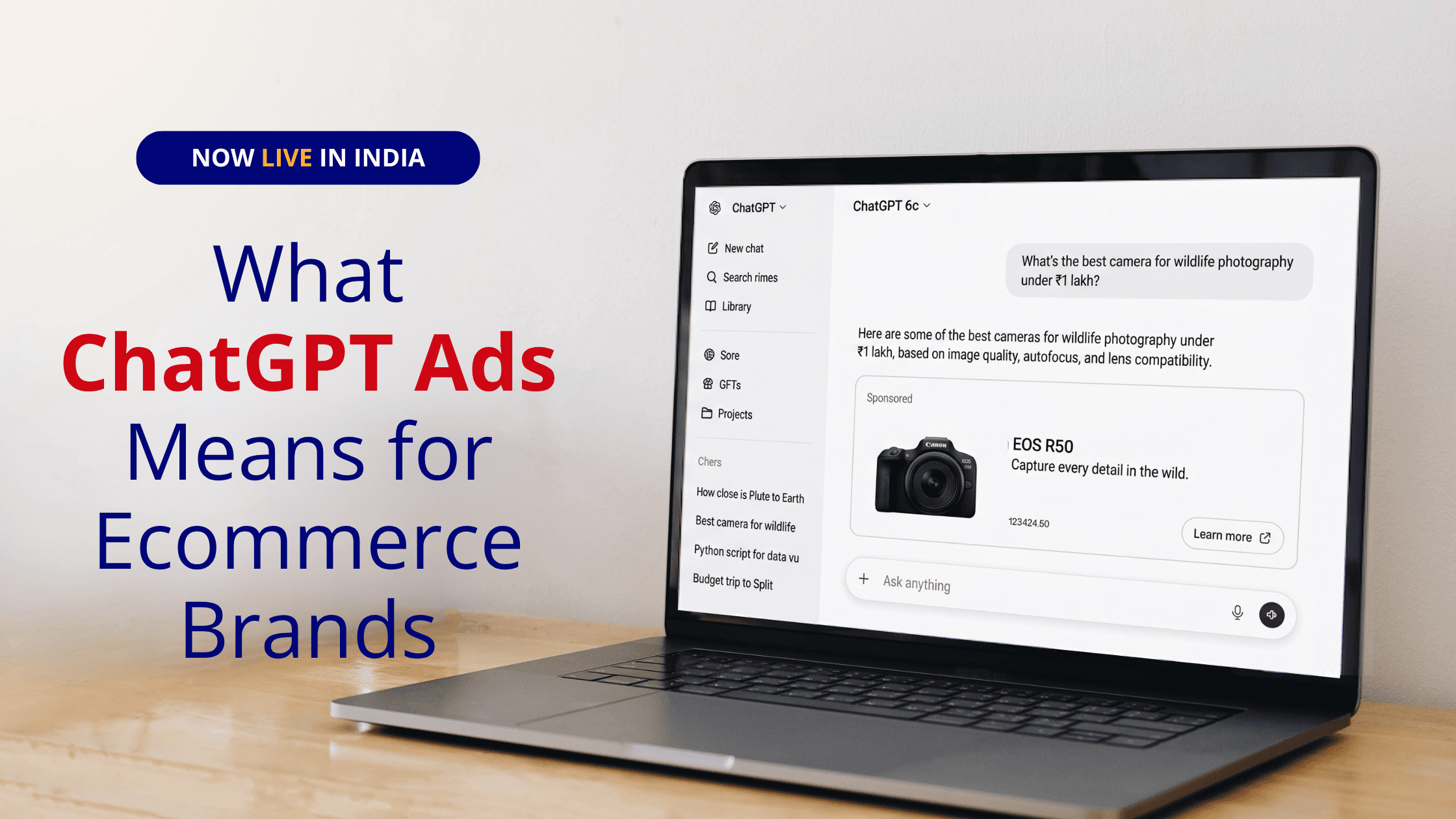
- Below the answer, clearly labeled. Ads sit beneath ChatGPT’s response, visually separated and marked as sponsored, and they do not influence the answer itself.
- Privacy-protected. Advertisers don’t get users’ chats, history, or personal details, only aggregate metrics like impressions and clicks.
- Agency-backed and busy already. WPP and Omnicom are the first agency partners, and 50-plus brands are in the initial rollout.
The scale: India is ChatGPT’s second-largest market, with more than 100 million weekly users, and usage has doubled year on year. This is not a small test.
Why it matters for ecommerce brands
A new channel is only worth your attention if it reaches buyers in the right moment. This one does. Four things make it genuinely interesting:
- High-intent audience. Ads show up in conversations where people are actively asking, researching, and deciding, not passively scrolling a feed. That’s much closer to the moment of purchase than most advertising gets.
- Low cost to test. A ₹725 daily starting budget means you can learn whether this works for your brand without a big commitment.
- First-mover advantage. With only a few dozen brands live at launch, early advertisers can establish presence in their category before the space gets crowded and prices rise.
- Brand-safe by design. Because ads are clearly labeled, kept separate from answers, and don’t use personal chat data, the usual brand-safety worries are largely handled.
The bottom line: for a store that sells online in India, this is a new, affordable, high-intent channel worth testing while it’s still early. That much is clear.
Timing is the real opportunity here. New ad channels follow a predictable pattern: cheap and uncrowded at the start, then steadily more expensive as advertisers pour in. Right now, with a few dozen brands live and the self-serve platform only just opening, the cost of experimenting is about as low as it will ever be. That window won’t stay open long in a market of this size, which is exactly why testing now, rather than in six months, is the whole advantage.
The catch most brands will miss
Here’s the part the launch buzz glosses over, and it’s the most important thing to understand. ChatGPT Ads sit below the answer, and they don’t influence it. That is a deliberate design choice by OpenAI, and it changes what you’re actually buying.
When someone asks ChatGPT for the best option in your category, the AI gives its genuine recommendation in the answer, and your ad appears underneath. So the ad buys you a spot near the conversation. It does not buy you the recommendation itself.
That distinction is everything. The brand ChatGPT actually names and endorses inside its answer carries far more weight than a labeled ad below it, because people trust the answer and know the ad is paid. And you cannot buy your way into that answer. You earn it, through the work of making your brand the one AI trusts and cites, which is GEO.
The trap to avoid: treating ChatGPT Ads as a substitute for being recommended. They’re a complement. If you only buy ads and never earn the citation, you’re paying to sit beneath a competitor that AI recommends for free.
The smart play: run ads and earn the answer
The winning approach isn’t ads or GEO. It’s both, working together. Each does something the other can’t:
- ChatGPT Ads put you near the answer now. Immediate, paid visibility in high-intent conversations, useful from day one while your organic presence builds.
- GEO puts you inside the answer over time. The earned recommendation that carries real trust and keeps working after the ad budget stops.
Used together, they cover the whole moment. The ad catches the shopper who’s deciding right now, while the earned citation makes you the brand the AI actually endorses. Over time, as your organic visibility grows, you become both the recommended answer and the sponsored option beneath it, which is a hard position for a competitor to beat.
The takeaway: test the ads early to capture the moment, but invest in GEO in parallel so you’re not renting a spot beneath a rival you could be outranking in the answer itself.
How to test ChatGPT Ads without wasting money
If you’re going to try it, and for many brands it’s worth trying, do it deliberately. A few ground rules:
- Start small and learn. Begin near the ₹725 daily floor, treat the first few weeks as learning, and scale only what clearly works.
- Point ads at pages that convert. A click from ChatGPT is wasted if it lands on a slow or confusing page, so make sure your landing experience is ready first.
- Watch what you can actually measure. You’ll get aggregate metrics like impressions and clicks, not detailed personal data, so set your expectations and tracking accordingly.
- Mind the attribution gap. AI-driven traffic is notoriously hard to track and often gets misattributed, so don’t judge the channel on last-click numbers alone.
- Run GEO alongside it. Use the ad spend to capture demand now while you build the organic visibility that earns the recommendation.
The mindset: treat the early days as a cheap experiment in a promising new channel, not a proven performance engine. Learn fast, keep what works, and pair it with the organic work that compounds.
Where CommerceV3 fits
This new channel plays exactly to how CommerceV3 is built. We run paid and organic as one connected system, which is the only way to do ChatGPT Ads properly.
Our team can run your ChatGPT Ads and wider paid media to capture demand now, while our GEO and AI search work earns you the recommendation inside the answer itself, the thing ads can’t buy. Because both run under one senior team under one roof, your ads point at pages that convert and your organic visibility keeps compounding, instead of the two being split across vendors who never talk. We do this for specialty and DTC ecommerce brands across food, gift, apparel, beauty, automotive, and B2B.
See where you stand before you spend on ads
Before you pay to sit beneath ChatGPT’s answers, find out whether you already show up inside them. Request CommerceV3’s free AI Visibility Assessment to see how often your brand appears across ChatGPT, Google AI, Perplexity, and Gemini today, and how you compare to competitors. Then let’s talk about testing ChatGPT Ads as part of a plan that earns the answer as well as buying the space below it. Request your assessment to start.
Frequently Asked Questions
What are ChatGPT Ads, and when did they launch in India?
ChatGPT Ads are sponsored placements shown inside ChatGPT, below its answers and clearly labeled. They went live in India on August 27, 2026, for logged-in adults on the Free and Go tiers, while paid Plus, Pro, and higher plans stay ad-free. A self-serve ChatGPT Ads Manager opens on September 4, 2026, letting any business run campaigns directly with daily budgets starting at ₹725, which puts the channel within reach of small and mid-sized brands.
Do ChatGPT Ads affect the answers ChatGPT gives?
No, and this is central to how they work. OpenAI has said ads do not influence ChatGPT’s responses; the answer is optimized around what’s most helpful to the user, and the ad appears separately below it. That means you can buy a placement near the conversation, but you cannot buy your way into the recommendation itself. Being the brand ChatGPT actually names in its answer is still earned, not purchased, which is why organic AI visibility still matters.
Are ChatGPT Ads worth it for ecommerce brands?
For many brands, yes, as an early test. They reach a high-intent audience at the moment of research, the entry cost is low, and the space is not yet crowded, so early movers can establish presence cheaply. The caveat is to treat it as a promising experiment rather than a proven engine, start small, point ads at pages that convert, and run it alongside GEO so you’re earning the recommendation, not just renting the space beneath it.
How much do ChatGPT Ads cost in India?
The self-serve Ads Manager, opening September 4, 2026, allows daily budgets starting at ₹725, so you can begin testing without a large commitment. As with any auction-based channel, your actual costs will depend on competition for the conversations you target, and prices may rise as more advertisers join. Starting near the floor and scaling only what works is the sensible way to learn what the channel is worth for your brand before committing more.
Can I still get recommended by ChatGPT without paying for ads?
Yes, and that earned recommendation is more valuable than a paid slot. When ChatGPT names your brand in its actual answer, that carries the platform’s credibility, and people trust it more than a labeled ad. You earn it through GEO, the work of making your content, technical setup, and authority strong enough that AI systems choose to cite you. Ads and GEO work best together: ads for immediate visibility, GEO for the trusted recommendation that compounds.
How do I measure results from ChatGPT Ads?
You’ll get aggregate campaign metrics such as impressions and clicks, but not detailed personal data on who saw or clicked, since OpenAI doesn’t share users’ chats or personal information. Beyond that, AI-driven traffic is often misattributed in standard analytics, frequently logged as direct rather than credited to the source, so don’t judge the channel on last-click numbers alone. Watch how branded searches, direct traffic, and overall sales move as your campaigns and AI visibility grow.