
Being near the AI’s answer and being the answer are two different jobs. Winning Q4 means doing both, and starting one of them right now.
Every holiday season has a new front where the fight for shoppers moves. This year, a big part of it is inside AI. People are asking ChatGPT and other assistants what to buy, who to trust, and what the best option is for their mom, their budget, their dog. And the brands that show up in those conversations are quietly taking sales from the ones that don’t.
There are two ways to show up. You can be recommended inside the answer itself, which is earned, or you can appear in an ad next to it, which is bought. They’re not the same, they don’t do the same job, and most stores are doing neither well. The ones that win Q4 do both, in the right order.
Here’s the catch that makes this urgent: one of those two takes weeks to build, and the clock is already running. So let’s lay out the whole playbook, and what to do first.
Two layers: being the answer vs. being near it
Start by getting the difference straight, because it shapes everything else.
The first kind is earned. People call it GEO, or AI search optimization. When someone asks an assistant for the best option in your category and it names you, that’s a recommendation you didn’t pay for. It borrows the platform’s credibility, shoppers trust it, and it keeps paying out long after you’ve stopped spending. The snag? You can’t buy it, and you can’t rush it. It builds over weeks, as the AI slowly decides your brand is worth citing.
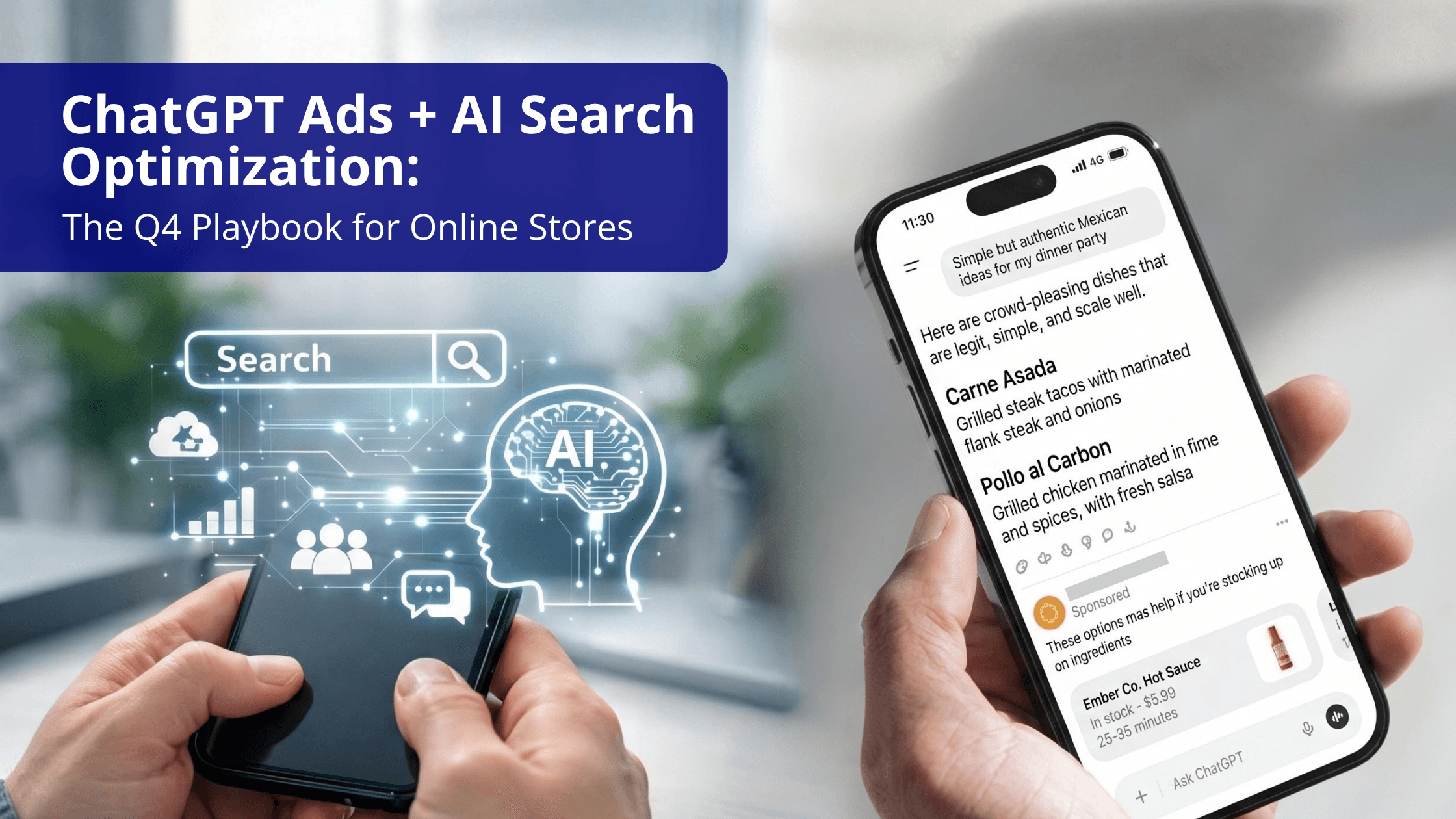
The second kind is paid. That’s ChatGPT Ads, which sit alongside or below the AI’s reply with a sponsored label on them. You can have one live in a day, which is exactly what a short, frantic selling season calls for. What an ad won’t do is buy you the recommendation itself, and people can smell an ad, so it carries less weight than an earned mention.
So GEO gets you into the answer and ads get you next to it. Slow and trusted, or fast and paid. In Q4 you want both going at once, because between them they let you own more of the split second when a shopper is actually making up their mind.
The timing catch that trips up most stores
Here’s why this can’t wait. The two layers run on completely different clocks.
Ads are instant. You can set them up and have them live in a day, which means you can spin them up right when holiday demand peaks and pull them back when it fades. Perfect for a spike.
GEO is the opposite. Because the recommendation is earned, it builds slowly, and the visibility you want during the late-November rush is the product of work done in September and October. There’s no button that fast-tracks it in the final week. So if you wait until the rush to think about being recommended, you’ve already missed it for this season.
That mismatch is the whole reason this is a playbook and not a checklist. The moves happen in a specific order, and the earned side has to start first.
The playbook, in order
The order matters as much as the tasks, so here’s how the season should actually unfold.
September and October are for the slow work. This is the part with a deadline you can’t move, so it starts first. The job is to get your brand cited by the AI tools for the questions holiday shoppers will be asking, and in practice that comes down to three things: product data clean enough for a machine to read, content built around what people actually type (gift ideas, best-for-this, under-a-certain-price), and the trust signals, reviews and consistent brand info, that make an assistant comfortable naming you. It compounds slowly. Which is the whole reason it can’t wait.
By late October, with that earned work already underway, turn to the paid side. Get your ChatGPT Ads set up wherever they’re open to you, and, honestly, spend more of your attention on the creative and the landing pages than on the ad settings themselves. Run a few small tests while clicks are still cheap. You want to walk into the expensive weeks knowing which angles work, not finding out the hard way when every click costs a premium.
Then the rush arrives, and this is where both layers pay off together. Your ads catch the people deciding right now; your earned visibility keeps you the brand the AI actually recommends. Two rules for this stretch. Don’t let a winning campaign burn through its budget by mid-afternoon, and don’t start poking at the GEO work in a panic. It’s doing its job. Leave it be.
And when Cyber Monday ends, whatever you do, don’t switch it all off. That’s the classic, costly mistake. December is stacked with last-minute gift buyers, and half your competitors have already gone dark, so the demand left over is cheaper to win. Keep the ads running, keep earning citations, and swing your messaging toward gifting and shipping deadlines. You’re not finished until the shipping cutoffs are.
Why the two are stronger together
Run only ads and you’re paying to sit beside an answer that might be recommending a competitor for free. Run only GEO and you miss the shoppers who respond to a well-placed ad in the moment. Run both and something better happens: you can be the brand the AI names and the brand advertising right beside that answer, at the same time.
That combination is hard to beat. A shopper sees you recommended, then sees you again in the ad, and the repetition plus the earned credibility does more than either could alone. It’s the same logic as showing up in organic search and paid search together, moved into the AI era. You’re not choosing between trust and reach. You’re stacking them.
How to split your effort between the two
A fair question is where to put your time and money across the two layers, and the honest answer is that it shifts as the season moves.
Early on, in September and October, almost all of your energy should go into the earned side, because that’s the part with a deadline you can’t extend. Ads can wait; citations can’t. As November arrives and your earned visibility is already building, you shift more attention to getting the ads and their landing pages ready. Then during the rush itself, the paid budget does most of the day-to-day work while the earned side quietly keeps paying off in the background.
So it’s less a fixed ratio and more a handoff. Earned work leads, paid work follows, and by the peak they’re running side by side. If you’re forced to choose because time or budget is tight, protect the earned side first, since it’s the one you can’t buy back later.
And whatever you spend on ads, remember it works harder when the earned side is strong. The same dollar buys more when the AI is already recommending you, because the shopper who sees your ad has often just seen you named as a real answer moments before.
A word on measuring this
Set your expectations on tracking before you start, because AI is messy to measure. ChatGPT Ads give you aggregate numbers like impressions and clicks, not detailed data on who saw what. And AI-driven visits often get logged as direct traffic in standard analytics, so a chunk of the sales both layers drive won’t be neatly attributed. Don’t judge the whole effort on last-click reports. Watch the bigger picture instead: how your branded searches, direct traffic, and overall holiday sales move as your AI visibility and ad spend ramp up together.
The mistake to avoid
Treating the ads as a shortcut to being recommended. They aren’t. You cannot pay your way into the AI’s actual recommendation; that stays earned. Brands that skip the GEO work and just buy ads end up renting a spot beneath a competitor the AI endorses for free, which is an expensive way to come second. The ads amplify a strong earned position. They don’t replace one. Do the slow work and the fast work, in that order, and you get the full effect.
Where CommerceV3 fits
This playbook only works if the earned side and the paid side are actually coordinated, which is hard when they sit with different people. CommerceV3 runs both. Our AI search optimization earns you the recommendation inside the answer, and our paid media runs the ads that sit beside it, all under one senior team so the two reinforce each other instead of being managed in separate silos. We do this for ecommerce brands across verticals, from food and beauty to apparel, pet, and B2B.
Start the slow work now, before the rush
The earned side of this playbook takes weeks, so the best time to start is today, not November. Request a free audit from CommerceV3 and we’ll show you where your brand stands in AI answers right now, and how to combine earned visibility with ChatGPT Ads for the holiday season while there’s still time to build it. Request your free audit before Q4 gets away from you.
Frequently Asked Questions
What’s the difference between ChatGPT Ads and AI search optimization?
AI search optimization, or GEO, earns your brand a recommendation inside the AI’s actual answer, which carries real trust and keeps working after you stop spending, but it takes weeks to build. ChatGPT Ads are paid placements that sit beside or below the answer, clearly labeled as sponsored; they’re fast to switch on but don’t buy you the recommendation itself, and shoppers know they’re ads. One is slow and earned, the other fast and bought. In Q4 you want both.
Can’t I just run ChatGPT Ads for the holidays and skip the rest?
You can, but you’ll leave money on the table and often pay to sit beneath a competitor the AI recommends for free. Ads put you near the answer; being named in the answer is earned through GEO and carries far more trust. The strongest position is both, the earned recommendation plus a paid placement beside it. Ads amplify a strong earned position rather than replacing one, so skipping the GEO work weakens the whole effort.
Why do I need to start now instead of in November?
Because the earned side runs on a slow clock. Getting recommended by AI is built over weeks as the tools come to trust your brand, so the visibility you want during the late-November rush depends on work done in September and October. There’s no way to fast-track it in the final week. Ads you can switch on instantly, but if you wait until the rush to think about being recommended, you’ve already missed it for this season.
How do the two work together?
They stack trust and reach. When a shopper sees your brand recommended inside an AI answer and then sees you again in a labeled ad beside it, the earned credibility and the paid repetition reinforce each other, more than either does alone. It’s the AI-era version of showing up in both organic and paid search at once. Run only ads and you may be paying next to a rival’s recommendation; run only GEO and you miss the shoppers an ad would have caught.
How do I measure results from this?
Set expectations first, because AI is hard to track cleanly. ChatGPT Ads give aggregate metrics like impressions and clicks, not detailed personal data, and AI-driven visits often show up as direct traffic in analytics, so attribution is fuzzy. Rather than judging on last-click reports, watch how branded searches, direct traffic, and overall holiday sales move as your AI visibility and ad spend ramp together. The trend across those signals tells you more than any single attributed number.
Are ChatGPT Ads available for my store?
Availability has been rolling out across markets and tiers, so it depends on where you and your customers are, and it keeps changing. Check the current status for your region before building a plan around it. The good news is that the GEO half of this playbook, earning your way into AI answers, works everywhere regardless of ad availability, so you can and should start that immediately while you confirm what ad options are open to you.